What Makes Filipino Comfort Food Different
Filipino comfort food isn't defined by one ingredient or one region. It's defined by what the food is for: family, gathering, and the feeling of being taken care of. Here's the culture behind sisig, sinigang, and the table they're served on.
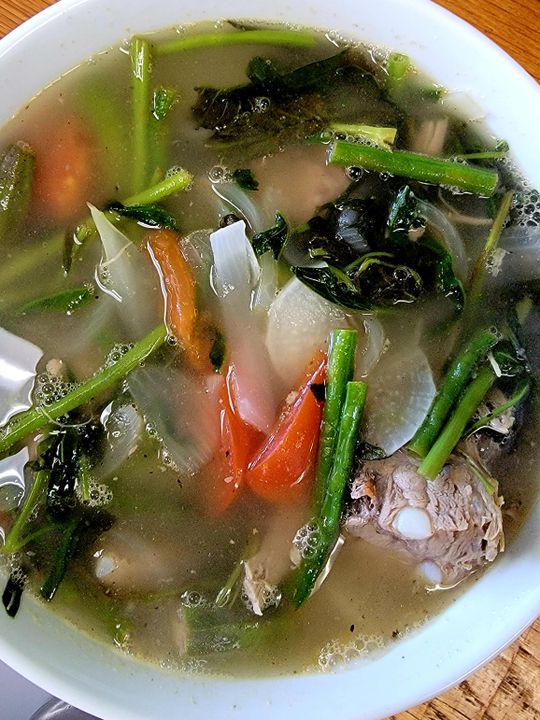
Every cuisine has its version of comfort food. But Filipino comfort food carries something a little different: it is almost always built around the people eating it, not just the person cooking it. A pot of sinigang rarely gets made for one. A plate of sisig is built to be shared, elbows on the table, hands doing at least some of the work.
To understand Filipino comfort food, it helps to understand two dishes that show up at nearly every gathering, and the tradition that often surrounds them both.
Sinigang: the taste of coming home
Sinigang is a sour tamarind-based soup, usually made with pork or beef, simmered with vegetables like eggplant, okra, and string beans. Its origins trace back to pre-colonial Philippines, when tamarind and other native souring agents were already part of everyday cooking, long before outside influences reshaped the rest of Filipino cuisine.
What makes sinigang distinct is less the recipe and more the occasion. It is the dish many Filipino families cook on a rainy day, the one that shows up at a homecoming, the dish people crave specifically when they are far from home. Ask someone in the Filipino diaspora what they miss most about their mother's cooking, and sinigang comes up constantly. It has become less a specific recipe and more a feeling: the particular comfort of something sour, hot, and familiar.
Sisig: from Pampanga to the rest of the world
Sisig has a more specific hometown. It comes from Pampanga, a province just north of Manila Bay, and traditionally uses parts of the pig, cheek, ear, jowl, that were once considered scraps. Cooks there chopped and grilled them, then finished the dish sizzling on a hot plate with onions, chilies, and calamansi, turning what other cooks might discard into something people now travel for.
Sisig means enough to the city of Angeles in Pampanga that it was formally declared an intangible cultural heritage by city ordinance in 2017, a rare case of a single dish being legally protected as part of a region's identity. That is not a small thing. It reflects how seriously the dish's origin is taken, and why a good sisig is judged as much on technique and balance as on taste alone: the crunch has to be right, the sourness has to be right, the char has to be right.
Why it all feels like home
What ties sinigang and sisig together isn't a shared ingredient. It's a shared purpose. Filipino comfort food was built for gathering: for feeding a lot of people at once, for using every part of what you have, for turning a meal into time spent together rather than time spent eating. That is true whether the meal happens in a home in Pampanga or a strip mall restaurant in Santa Maria.
It is also, honestly, why so many people who try Filipino food for the first time describe it the same way: it feels like walking into someone's home. That is not an accident. It is the entire point.
Come taste the tradition
Our sisig and sinigang are made the same way they'd be made in a Filipino home kitchen. Order online for pickup in Santa Maria.
Order Online